
KitKat Heist: How 12 Tonnes of Chocolate Became a Branding Masterclass
Introduction: The Story of KitKat
KitKat is not just a chocolate bar. It is one of the world’s most recognizable snack brands, first launched in the UK in 1935 and shaped over decades by one of advertising’s most famous lines, “Have a break, have a KitKat.” Over time, the brand built its identity around pause, pleasure, and playful marketing. By 2025, Nestlé said KitKat was sold in more than 85 countries and moved over 5 billion bars a year. That long brand memory is exactly why the recent KitKat heist in Europe did not feel like just another supply-chain story. It instantly became culture.
Did KitKat Get Stolen? Yes, and the Story Was Huge
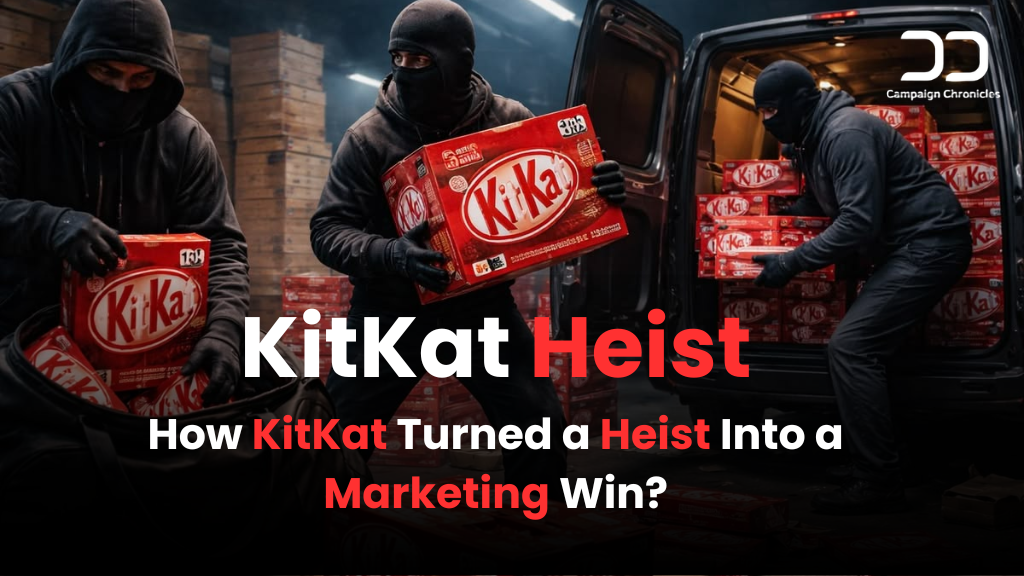
Yes, KitKat really did get stolen. In late March 2026, Nestlé confirmed that 12 tonnes, or about 413,793 KitKat bars, disappeared while being transported from central Italy to Poland. Reports described it as a major chocolate heist in Europe, and because the truck never reached its destination, people quickly started calling it the biggest robbery in KitKat history. What made the story even more viral was the timing. The news landed close to April Fool’s Day, so many people first assumed it was a prank. It was not.
How KitKat Was Stolen, and Why the Internet Couldn’t Ignore It
- The number itself was huge: 12 tonnes sounded dramatic and instantly headline-worthy.
- The story had all the ingredients of a viral moment: mystery, scale, humour, and a globally known brand.
- People began searching terms like Did KitKat get stolen?, Trace KitKat, tracking KitKat bars, and stolen KitKat found.
- The timing and tone made the story feel less like a supply issue and more like a live internet event.
The Stolen KitKat Tracker Turned News Into Participation
This is where the branding move got really smart. Instead of posting one statement and disappearing, KitKat launched the Stolen KitKat Tracker, an official web tool that let people check whether their chocolate bar came from the missing batch. Consumers could enter the 8-digit batch number on the back of a bar, which made the story interactive. So searches like stolen KitKat tracker website, stolen KitKat tracker link, stolen KitKat batch number, and even stolen KitKat tracker app suddenly made sense. Technically, it was a web-based checker, not a standalone app, but the idea was strong enough that people kept talking about it like a digital hunt.
How KitKat Converted the Heist Into Branding and Market Buzz
What KitKat did next is the real lesson. It did not hide the issue behind corporate language. It leaned into the absurdity, kept the tone playful, and stayed true to the brand voice people already knew. Instead of losing attention to a crisis, the brand redirected attention into engagement. The result was a strange but effective mix of PR, meme culture, and product visibility. Industry coverage now describes the theft as a PR win, because people who may not have thought about KitKat that week were suddenly discussing batch codes, limited editions, and the brand’s humor everywhere online. That’s not luck. That’s fast, brand-consistent storytelling.
How Much Is 12 Tonnes of KitKat Worth?
The exact public value was not clearly disclosed in the main wire reports, which focused more on the scale of the loss and the logistics angle. But what mattered in the public imagination was the number itself: more than 400,000 bars gone. That made 12tonnes more than a statistic. It became a headline, a meme, and a recall device. In branding terms, the missing quantity worked like a giant visual hook. Even people who never checked the tracker still remembered the number.
How Other Brands Used the KitKat Heist for Their Marketing
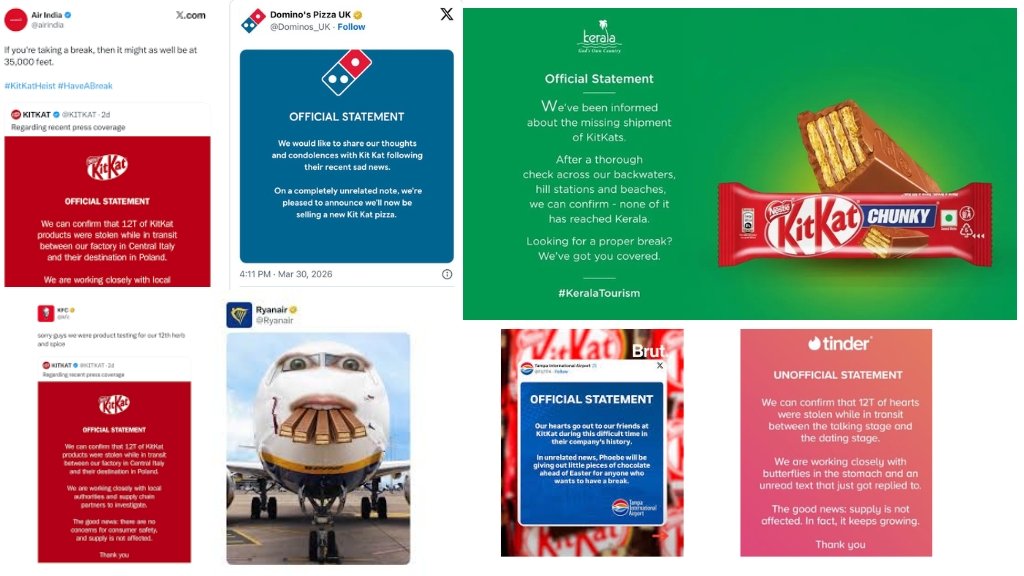
Once the story went viral, other brands quickly joined the trend with reactive posts. Coverage from The Economic Times and NDTV says the brands that jumped in included Microsoft, McAfee, Domino’s Pizza UK, DoorDash, Kerala Tourism, KFC, and others.
Brand reaction examples
- Domino’s Pizza UK used the moment to joke about launching a KitKat pizza.
- DoorDash joked that a “packaging error” had left it with tons of KitKats in DashMarts.
- KFC joked that it was only testing a “12th herb and spice.”
- Kerala Tourism joined the trend with a travel-flavoured response built around the idea of taking a proper break.
- Ryanair and other brands also joined with meme-style visuals and playful posts.
Why this mattered
- The trend moved beyond KitKat and became a shared marketing moment.
- Other brands used humour to insert themselves into a viral conversation.
- This is a strong example of reactive marketing done fast.
Was the Stolen KitKat Found?
As of April 17, 2026, the consistent reporting still said the truck and chocolate were missing. So for people searching stolen KitKat found, stolen KitKats found, or tracking KitKat bars, the latest widely reported answer is still no confirmed public recovery yet. And honestly, that ongoing uncertainty keeps the story alive a little longer, which is unusual for a logistics incident but very normal for internet-driven brand moments.
Key Notes from the KitKat Heist
- First, a crisis can become content when the response fits the brand.
- Second, interactivity matters, because the Stolen KitKat Tracker made the audience part of the story.
- Third, speed wins. KitKat moved before the internet got bored.
- Fourth, a single quirky event can create earned media far beyond paid ads.
- Finally, when a story is culturally sticky enough, even unrelated brands find ways to join the wave.
Conclusion
The KitKat heist was not just a chocolate heist. It became a case study in modern branding. A truckload of missing bars turned into headlines, memes, user participation, and competitor reactions across platforms. KitKat did not invent the theft, obviously, but it did something more valuable. It shaped the narrative around it. That is why this story matters. In a crowded attention economy, brands that react fast, stay in character, and invite the public in can turn even bad news into brand memory. KitKat lost a shipment, sure. But in marketing terms, it gained something bigger: attention people actually wanted to follow.
If you’d like to read more articles like this, visit our Campaign Chronicles website for more brand stories, marketing insights, and creative case studies.
No responses yet